Pallet, road freight and export planning
Energy Drink Shipping and Logistics for Wholesale Orders
Energy drink shipping and logistics must connect the exact allocated SKU with a viable load, a defined delivery term and the documents required for the destination. WOOVE coordinates European pallet freight and selected export routes for verified business buyers, with product version, case and pallet configuration, batch, BBD, commercial roles and delivery scope confirmed before dispatch.
Destination-first freight planning
A Transport Quote Is Built from the Delivery Point Back to the Stock
A freight price is meaningful only when the goods, route and receiving conditions are known. WOOVE first reviews the destination country, city, postcode or port; requested brands and formats; pallet or container quantity; buyer and importer status; preferred Incoterm; delivery deadline; and unloading conditions. Stock preparation time and estimated carrier transit are then stated separately.
European fulfilment and dispatch coordination is handled through WOOVE’s logistics arrangement in Weilimdorf, Germany. The final release point, allocated goods, shipment measurements, contracting seller and accepted responsibilities are recorded in the quotation and proforma invoice rather than assumed from this page.
Shipment structures
Load Formats for Wholesale Energy Drink Delivery
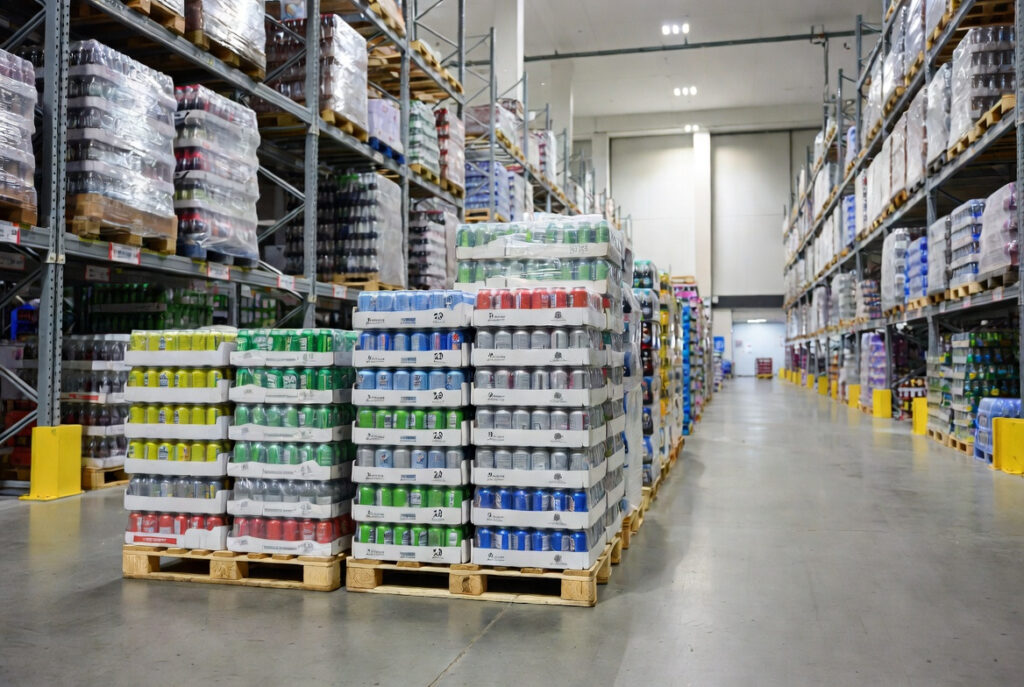
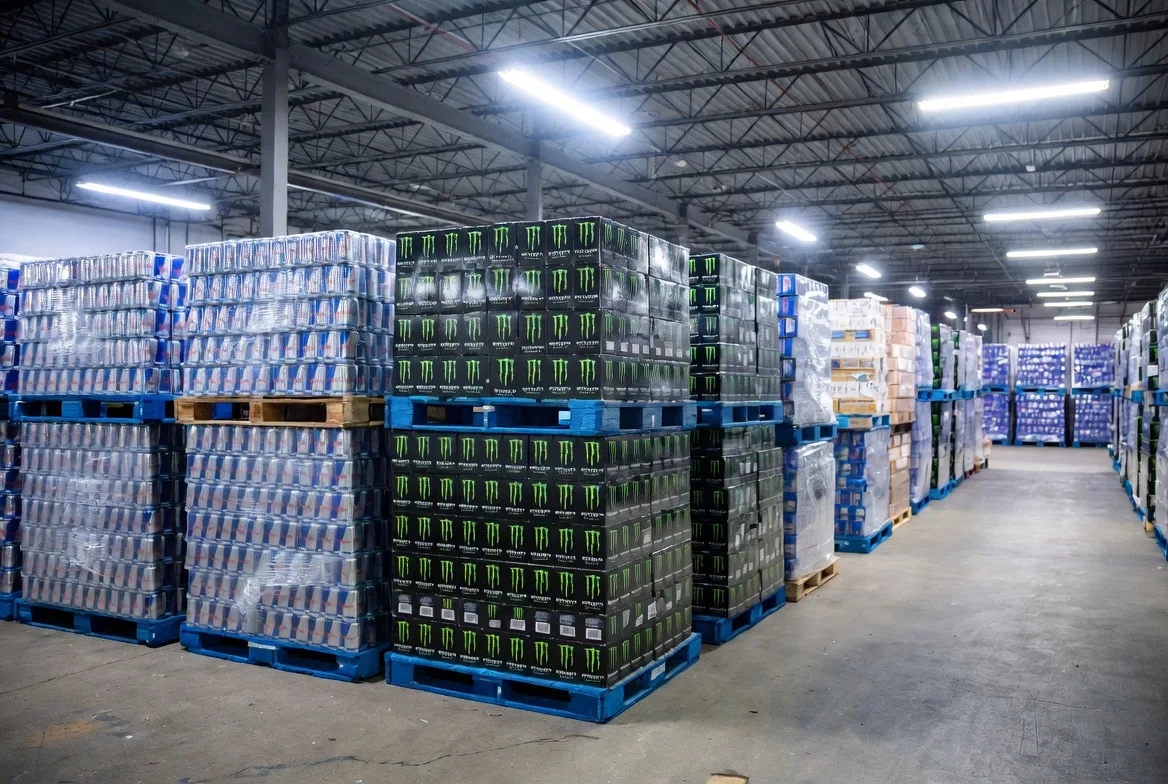
The load format is selected from the available case configuration, pallet stability, total quantity, route economics and receiving capability. Every quotation identifies the case count, units per case, pallets, gross shipment data and whether pallet exchange or another pallet treatment applies.
Mixed pallets by sealed case
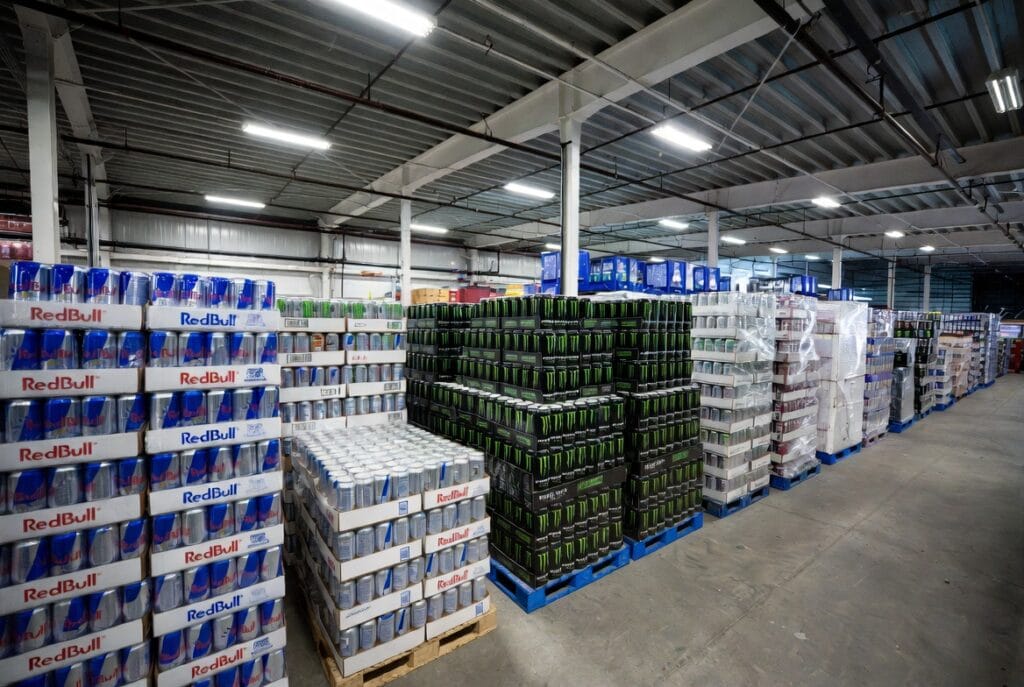
Selected brands or variants may be combined when stock allocation, compatible case formats and stable pallet construction allow. Loose-can mixing is not offered.
Review mixed-pallet requirementsMulti-pallet road freight
Eligible European orders can move as pallet freight or part-load service. Route feasibility depends on total weight, stackability, postcode and receiving conditions.
Compare freight routesFull-truckload planning
Larger recurring orders can be reviewed for dedicated or full-truckload transport, subject to stock, load plan, axle and weight limits, vehicle type and delivery access.
Plan recurring distributor supplyContainer export review
20-foot, 40-foot or high-cube planning is assessed by destination, container payload, product format, palletized or floor-loaded structure, port pair and importer readiness.
Review export-market planningContainer capacity is not published as one universal can count. Payload, internal dimensions, pallet type, case dimensions, product weight and load method must be calculated for the actual SKUs.
Stock and pallet controls
What Is Verified Before a Wholesale Load Is Released
Logistics begins before a carrier is booked. The allocated goods must match the accepted product and market scope, and the pallet must be suitable for the proposed route. The release record is based on the real stock lot rather than a generic catalogue description.
- Brand, variant, can or bottle size and source-market version
- Case format, units per case and cases allocated to each pallet
- EAN/GTIN, label language and relevant deposit status
- Batch and exact best-before date of the allocated stock
- Pallet count, dimensions, gross weight and stackability
- Factory-sealed case integrity and visible packaging condition
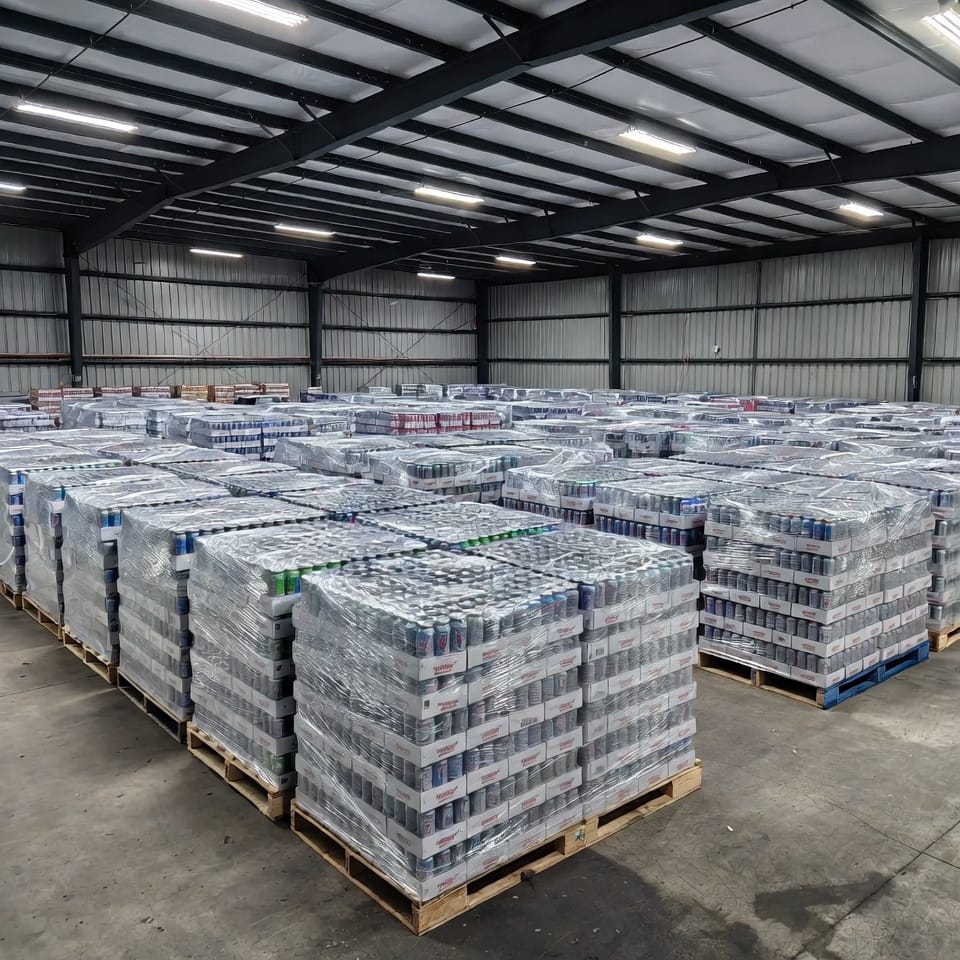
- Stretch wrapping, strapping or edge protection as required by the load
- Vehicle, container or collection instructions and document handover
Available stock typically carries approximately 15–24 months of remaining shelf life where available. The allocated batch and exact BBD are confirmed before order approval and dispatch; the range is not guaranteed for every SKU.
Route-specific planning
Energy Drink Shipping and Logistics Routes Across Europe and Export Markets
The same shipment cannot be treated identically on every route. Customs boundaries, importer roles, food-information requirements, security filings, transport documents and destination services change the information needed before a shipment can be accepted.
Intra-EU road freight
Normally reviewed using buyer VAT status, destination postcode, pallet and weight data, delivery access and market-placement responsibilities. National deposit, packaging and beverage charges remain destination-specific.
Choose an EU market pageUnited Kingdom routes
Great Britain and Northern Ireland require separate review of the importer, GB or XI EORI, customs representation, product information, duty, import VAT and delivery responsibilities.
Review UK supply requirementsNon-EU European delivery
Export and import declarations, tariff classification, origin treatment, importer details, customs broker, border route and destination taxes must be allocated before pricing.
Review export documentsOcean and air freight
Port-to-port container routes are reviewed by port pair, load plan, consignee, broker, required arrival period and destination handling. Air freight is assessed only where quantity, cost and handling make it viable.
Request route review| Route | Buyer information needed | Typical transport record | Primary planning risk |
|---|---|---|---|
| EU pallet freight | EU VAT, full address, postcode, pallets, receiving and market-placement role | Commercial and packing records plus road transport document as applicable | Wrong product version, incomplete receiving data or national obligations |
| Great Britain | Importer, GB EORI, customs arrangement, destination and unloading conditions | Commercial invoice, packing list, customs and road records as applicable | Unallocated import, duty, VAT or food-business-operator responsibility |
| Northern Ireland | Buyer/importer status, XI or EU details, exact destination and movement route | Route-specific customs and transport records | Treating Northern Ireland as identical to Great Britain |
| Ocean export | Country, port, consignee, broker, container, Incoterm and arrival period | Commercial invoice, packing list and bill of lading plus required export records | Missing importer clearance, port costs, free-time or destination handling plan |
Delivery responsibility
Incoterms Are Selected by Route, Not Added as Marketing Labels
An Incoterm identifies important delivery tasks, costs and risks, but it does not replace a sales contract, payment terms, product compliance or customs instructions. The accepted quotation must name the Incoterms® 2020 rule and the precise place or port. WOOVE reviews the following structures where operationally and legally feasible.
Buyer-arranged main transport
Collection or FCA may be reviewed when the buyer or its carrier controls the main transport. The exact handover point, loading responsibility, export role and collection window must be written into the offer.
Delivery to an agreed place
DAP can be reviewed when WOOVE arranges carriage to the named destination while the buyer accepts the import clearance and unloading responsibilities defined in the agreed scope.
Carriage-paid structures
CPT or CIP may be considered for suitable multimodal routes. The place where risk transfers, insurance scope for CIP and named destination must be understood before acceptance.
Origin or port handover
FCA is normally more appropriate when containerized goods are handed to a carrier or terminal before vessel loading. FOB is considered only for a suitable sea or inland-waterway structure.
Named port of destination
CFR or CIF applies only to sea or inland-waterway transport. Port charges, insurance level, destination clearance and inland delivery remain separate unless expressly included.
No automatic duty-paid promise
DDP is offered only when WOOVE can lawfully and operationally accept the relevant import, customs, tax, deposit, excise, registration and final-delivery responsibilities in writing.
The International Chamber of Commerce explains that Incoterms® rules clarify delivery tasks, costs and risks. The final named place and the contract-specific responsibilities still need to be stated precisely.
Commercial and transport records
Documents Are Issued According to the Transaction and Route
A commercial shipment does not receive every possible document. The required set depends on the buyer and seller, route, customs procedure, mode of transport, origin treatment, destination and agreed Incoterm. WOOVE identifies the documents included or required before dispatch.
- Written quotation and proforma invoice
- Commercial invoice and packing list
- Product, case, pallet and load breakdown
- Allocated batch and BBD confirmation
- Road consignment note, bill of lading or air waybill as applicable
- Export declaration and movement reference where applicable
- Proof or certificate of origin only when applicable and supportable
- Customs, inspection or destination documents required for the accepted route
An EORI number is required for customs clearance in the EU for import, export and transit operations. UK routes may require a GB or XI EORI depending on the movement.
Timing and freight cost
Preparation Time, Transit Time and Delivery Appointment Are Separate
A carrier’s estimated transit begins only after the goods are released to the agreed service. Stock allocation, product-version verification, pallet preparation, export formalities where applicable and carrier booking occur before that point. A destination warehouse may also require an appointment after the line-haul movement.
Preparation
Stock is allocated, batch and BBD are recorded, cases and pallets are checked, shipment measurements are confirmed and the accepted documents are prepared.
Carrier transit
The estimate depends on origin and destination, service level, border or port movement, carrier capacity, weekends, holidays and operational disruption.
Final delivery
Appointment rules, delivery windows, site access, unloading equipment, waiting time and failed-delivery conditions can affect the final schedule and cost.
WOOVE confirms an estimated preparation period and estimated transit separately in the quotation or order communication. Neither estimate should be interpreted as an unconditional guaranteed arrival date unless a specific guaranteed service is accepted in writing.
Receiving controls
Delivery-Site Information Prevents Avoidable Cost and Damage Disputes
The receiving warehouse must be able to accept the booked vehicle and pallet structure. Full address details, contact person, opening hours, booking reference, access restrictions and unloading equipment should be supplied before dispatch. Special delivery services must be priced before the carrier is instructed.
- Confirm the delivery appointment and receiving contact
- Ensure forklift, dock or requested tail-lift service is available
- Inspect pallet wrap, cases and visible condition before signing
- Record visible shortage or damage on the carrier document or POD
- Take clear photographs before moving or breaking down the pallet
- Retain packaging, labels and documents for investigation
- Report the issue using the time and evidence requirements in the order terms
Documented logistics workflow
From Destination Requirement to Freight Release
Submit the requirement
Provide company, destination, requested products, quantities, preferred term, required period and receiving details.
Allocate the stock
Available SKUs, product versions, case formats, pallet structure, batch and BBD are reviewed against the destination.
Build the route
Load data, service, carrier feasibility, customs roles, Incoterm, unloading and estimated timing are assessed.
Issue the quotation
The offer records the goods, freight basis, inclusions, exclusions, responsibilities, validity and required documents.
Invoice and prepare
After acceptance and verification, a proforma invoice is issued. Preparation begins after payment is confirmed under the agreed terms.
Release and document
The approved load is handed over under the written instructions, with transport or export records supplied as applicable.
Commercial transparency
The Legal Seller, Fulfilment Operation and Freight Responsibilities Are Identified Separately
WOOVE is the trading brand of LIMITED LIABILITY COMPANY WOOVE, registration no. 46329225, with its registered office in Kharkiv, Ukraine. European fulfilment and dispatch are coordinated through an established logistics arrangement in Weilimdorf, Germany. The contracting seller, payment beneficiary, stock, release point, destination and accepted delivery responsibilities are identified in the quotation and proforma invoice.
Continue by purchasing requirement
Products, Markets, Mixed Pallets and Distributor Supply
Use the specialist page that owns the next part of your procurement decision.
Wholesale energy drinks
Review the supplied brands and product-level formats before requesting a load.
View wholesale productsMarkets we supply
Choose the destination guide for market-specific labels, deposits, taxes and importer roles.
Choose a destination marketMixed energy drink pallets
Review sealed-case mixing, compatible formats and pallet-stability considerations.
Review mixed-pallet supplyDistributor and importer supply
Plan recurring, multi-pallet, full-truckload or larger commercial requirements.
Explore distributor supplyShipping and logistics FAQ
Questions About Wholesale Energy Drink Freight
Where are European orders fulfilled?
European fulfilment and dispatch coordination is handled through WOOVE’s logistics arrangement in Weilimdorf, Germany. The final release point and collection or shipment instructions are confirmed in the written order documents.
What is the minimum order for European delivery?
The normal starting quantity for eligible European branded-energy-drink orders is two pallets. Final minimums depend on the selected brands, variants, case formats, stock allocation, pallet structure and route.
Can different brands or flavours be shipped on one pallet?
Selected brands and variants may be mixed by factory-sealed case when stock allocation, compatible formats and stable pallet construction allow. Loose-can mixing is not offered.
How many cases fit on a pallet or in a container?
There is no single universal quantity. The result depends on the product format, case dimensions, case weight, pallet type, stacking pattern, container payload and whether the goods are palletized or floor loaded. The accepted load plan records the actual quantity.
How long does delivery take?
Preparation time and estimated carrier transit are confirmed separately after the allocated stock, destination, route, load, carrier capacity and receiving requirements have been reviewed. Estimates are not guaranteed arrival dates unless a specific guaranteed service is accepted in writing.
Does WOOVE offer DAP delivery?
DAP may be offered on eligible routes when the destination, buyer import responsibility, unloading and service scope are clear. Availability and the named place are stated in the quotation.
Is DDP available for every destination?
No. DDP is reviewed case by case and is offered only when WOOVE can lawfully and operationally accept the relevant import, customs, tax, deposit, excise, registration and final-delivery responsibilities in writing.
Which export documents are supplied?
The document set depends on the transaction and route. It can include a commercial invoice, packing list, transport document, export declaration and applicable origin or destination records. The quotation identifies what is included or required.
Can our company arrange collection?
Collection may be reviewed where available. The buyer must provide the carrier and vehicle information, planned collection time and any export arrangement required. The final release point and handover responsibilities are confirmed in writing.
Can WOOVE ship to Great Britain and Northern Ireland?
Selected routes can be reviewed, but Great Britain and Northern Ireland are not treated as identical movements. The importer, GB or XI EORI, customs procedure, product information and destination responsibilities must be confirmed.
Is cargo insurance automatically included?
No universal insurance promise is made. Insurance responsibility and coverage depend on the selected Incoterm, carrier arrangement and accepted quotation. Any required cargo cover should be requested before the transport is booked.
What should the buyer do if visible damage is found?
Inspect the shipment before signing, record visible shortage or damage on the carrier document or proof of delivery, take clear photographs, retain the packaging and report the issue using the timing and evidence requirements stated in the order terms.
Route-based quotation
Request Product Availability, Freight and Delivery Scope
A complete enquiry allows the actual stock, load format, route, Incoterm and receiving requirements to be priced together. Include your legal company details, exact destination, requested products, pallet or container quantity, required period and unloading information.
- Business enquiries only
- Two-pallet normal starting quantity for eligible European orders
- Export quantities confirmed by destination, product and route
- Product version, labels, EAN, batch and BBD reviewed
- Preparation and estimated transit stated separately
- Incoterm, documents, import and unloading roles confirmed in writing
Your information is used only to review and respond to your commercial enquiry.