Energy Drink Prices in Europe Wholesale: 2026 Buyer Guide
A practical blog guide for importers, distributors, supermarkets, vending operators and B2B buyers who want to understand wholesale energy drink pricing, pallet costs and landed margins in Europe.
Written by the Woove GmbH Export & Sales Team | Updated April 25, 2026
The European energy drink market remains highly active across supermarkets, convenience stores, fuel stations, vending sites, gyms and export channels. However, wholesale pricing changes significantly depending on brand demand, pallet quantity, shipping route, best-before date, country of supply and final delivery terms.
This guide explains energy drink prices in Europe wholesale using a buyer-focused structure: average pallet pricing, country differences, freight impact, brand comparison, margin expectations and practical sourcing considerations. It is designed for serious B2B buyers who need more than a generic product list.
European Wholesale Energy Drink Price Index
The table below gives a practical overview of pallet-level energy drink prices across Europe. It helps buyers compare premium brands, value brands and high-demand social media-driven products before requesting a formal quotation.
| Brand / Category | Common Format | Estimated Wholesale Range | Typical Pallet Structure | Buyer Notes |
|---|---|---|---|---|
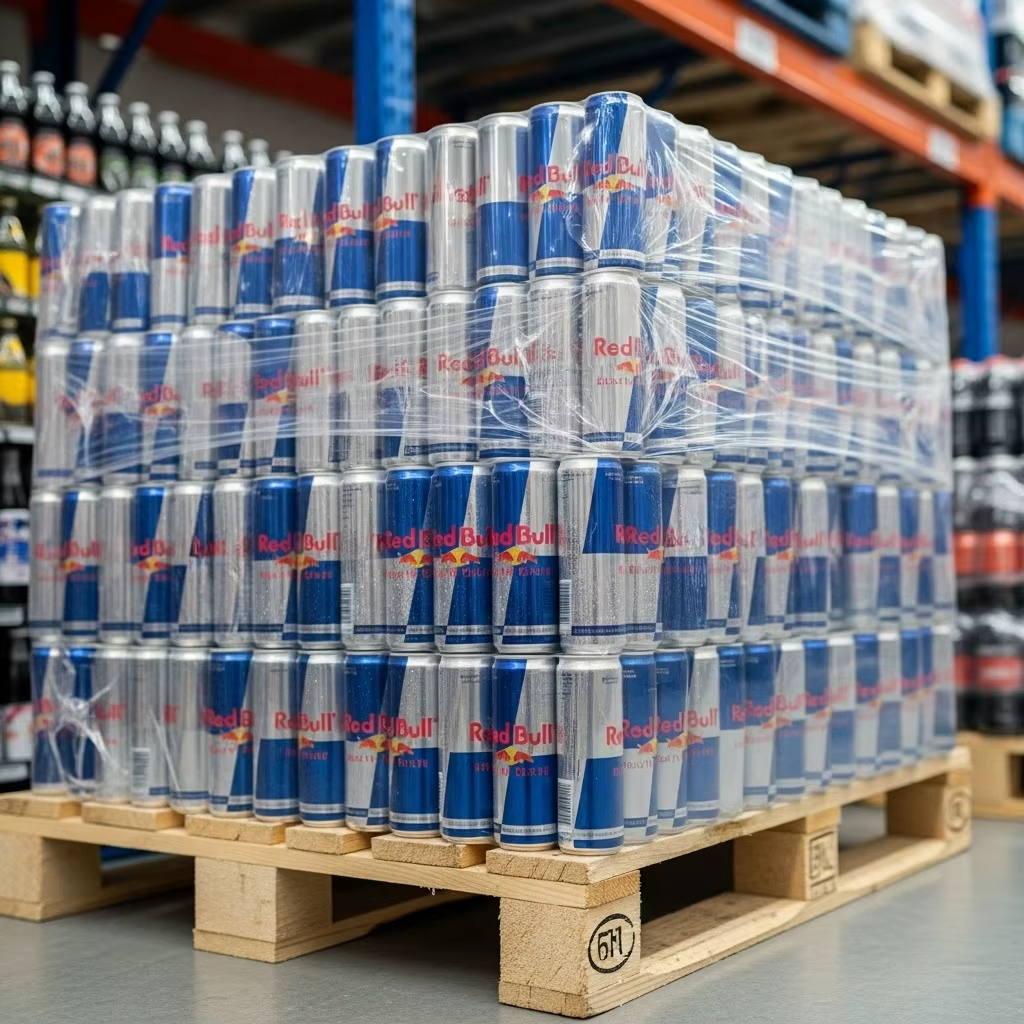
| Red Bull Original | 250ml can | Approx. €0.83–€1.05 per can | Usually 108 trays per pallet | Premium demand, fast turnover, strong supermarket recognition. |
| Red Bull Sugarfree / Editions | 250ml can | Approx. €0.85–€1.12 per can | Usually 108 trays per pallet | Special editions may cost more depending on availability. |
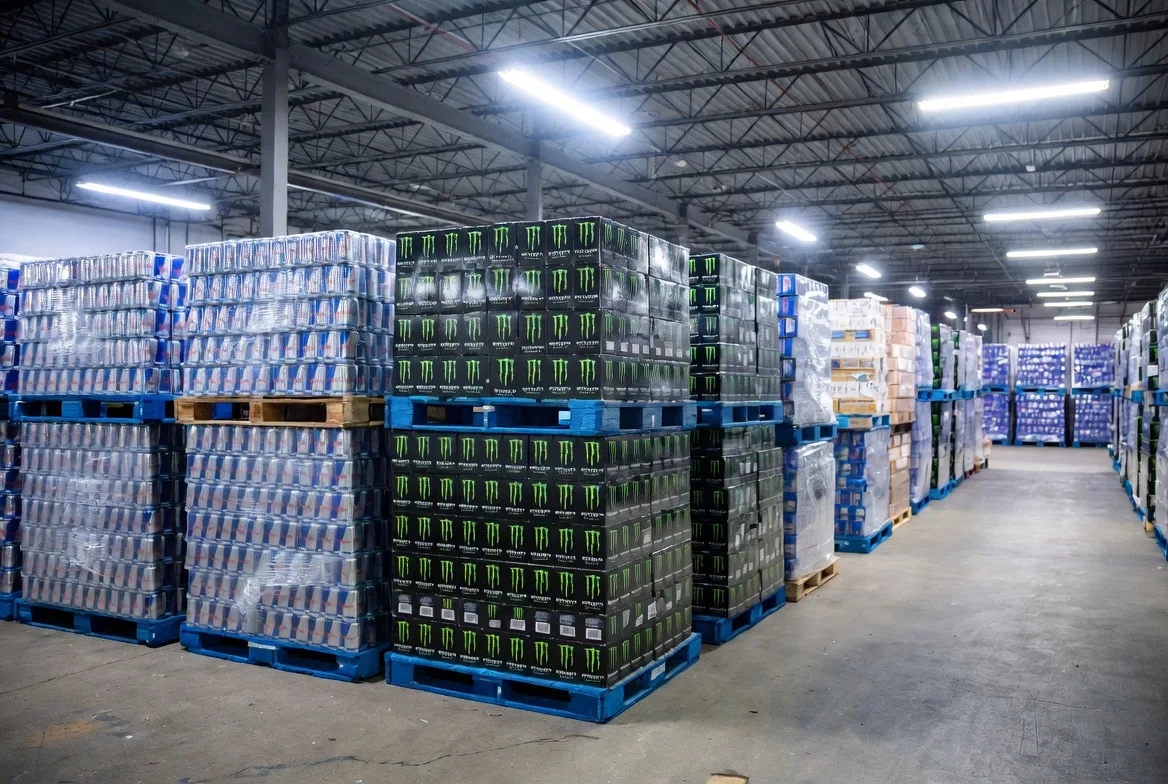
| Monster Energy | 500ml can | Approx. €0.95–€1.25 per can | Often 90 trays per pallet | Strong gym, retail and convenience-store demand. |
| Prime Hydration / Prime Energy | 500ml bottle / can | Approx. €1.10–€1.60 per unit | Varies by supplier and format | Price depends heavily on demand, flavour and market availability. |
| Hell Energy | 250ml can | Approx. €0.45–€0.75 per can | Often 120 trays per pallet | Competitive option for discount retail and value distribution. |
| Rockstar / Relentless | 500ml can | Approx. €0.75–€1.15 per can | Often 90 trays per pallet | Good alternative when buyers need variety outside Red Bull and Monster. |
| Private Label Energy Drinks | 250ml / 330ml / 500ml | Approx. €0.35–€0.90 per unit | Depends on production and MOQ | Best for buyers focused on margin, own-brand positioning or retail chains. |
Price methodology: these ranges are based on European pallet-level beverage quotations, wholesale market averages, export logistics benchmarks and distributor buying patterns. Always confirm live availability before placing an order.
Retail vs Wholesale Energy Drink Prices in Europe
Retail prices and wholesale prices serve different purposes. Retail pricing reflects shelf positioning, store margin, promotions, VAT and local consumer demand. Wholesale pricing focuses on pallet economics, volume, delivery route, shelf life and supplier availability.
Retail Buyers
Retail customers pay per can or bottle at supermarket, fuel-station or convenience-store level. Promotions can change weekly.
Wholesale Buyers
Wholesale buyers compare pallet cost, minimum order quantity, freight route, VAT handling and delivery terms.
Export Buyers
Export buyers calculate landed cost, documentation, customs process, destination rules and resale margin.
Typical Retail Price Ranges
| Country | Red Bull 250ml Retail | Monster 500ml Retail | Prime Retail | Market Comment |
|---|---|---|---|---|
| Germany | €1.39–€1.79 | €1.49–€1.99 | €2.99–€4.50 | High turnover and strong supermarket competition. |
| Netherlands | €1.49–€1.99 | €1.59–€2.29 | €2.49–€3.99 | Strong logistics and redistribution market. |
| France | €1.59–€2.10 | €1.79–€2.40 | Varies by retailer | Retail margin depends heavily on channel and location. |
| Italy | €1.50–€2.10 | €1.60–€2.20 | Varies by city | Tourism and local retail density influence pricing. |
Wholesale Energy Drink Prices by Brand
Red Bull Wholesale Prices in Europe
Red Bull normally commands a premium wholesale price because it has strong consumer recognition, fast shelf turnover and consistent demand across supermarkets, gyms, vending operators and export traders. Buyers should compare not only the per-can price but also best-before date, pallet condition, language label and destination delivery cost.
For brand-specific pricing, review our dedicated page: Red Bull Wholesale Price Europe.
Monster Energy Wholesale Prices in Europe
Monster Energy is usually positioned close to Red Bull in premium beverage distribution, especially in gyms, convenience stores, fuel stations and youth-focused retail channels. Monster Ultra, special flavours and imported editions can carry a higher wholesale price because demand is more flavour-sensitive.
Prime Hydration and Prime Energy Wholesale Prices
Prime pricing is strongly influenced by social media demand, flavour availability and country-specific distribution. Buyers should be careful with speculative pricing and always confirm authenticity, best-before dates and pallet condition before payment.
For availability and bulk options, visit Buy Prime Drink Europe.
Value Brands and Private Label Energy Drinks
Buyers focused on margin often consider Hell Energy, Rockstar, Relentless and private-label options. These products can offer stronger price flexibility, especially for discount retail, vending and high-volume distribution.
If your goal is higher margin or exclusive retail positioning, see Private Label Energy Drink Europe.
Country-Based Wholesale Energy Drink Pricing in Europe
Country differences matter because beverage pricing is not only about product cost. It is also shaped by local demand, freight access, warehouse capacity, distributor competition, VAT handling and export routes.
Germany
Germany is one of Europe’s most important beverage wholesale markets. Strong infrastructure, high turnover and central logistics routes can make German supply attractive for EU and non-EU buyers.
- Strong central European freight access
- High stock movement across major brands
- Suitable for pallet and truckload distribution
Netherlands
The Netherlands is valuable for redistribution because of port access, export consolidation and efficient freight networks. It is often useful for mixed-pallet and onward export buyers.
- Strong Rotterdam logistics access
- Efficient cross-border transport
- Useful for export consolidation
Poland
Poland can be competitive for value brands, private-label drinks and Eastern European distribution. It is also useful for buyers seeking cost-conscious beverage options.
- Competitive value-brand pricing
- Strong discount retail supply options
- Useful for Eastern European distribution
Belgium and France
Belgium is well positioned for cross-border movement, while France offers strong retail demand. Freight and pallet cost must be calculated carefully depending on final delivery point.
- Good Western Europe access
- Strong consumer demand
- Route planning is important for margins
What Affects Energy Drink Prices in Europe Wholesale?
The lowest unit price is not always the best commercial option. Serious buyers should compare product price, freight cost, documentation, stock reliability, shelf life and resale timing before placing an order.
1. Brand Demand
Red Bull and Monster usually hold higher wholesale pricing because they are easier to resell and move faster in many retail channels.
2. Best-Before Date
Longer shelf life gives buyers more resale flexibility. Short-dated stock may be cheaper but requires faster turnover.
3. Pallet Quantity
Large and recurring orders often create better pricing because suppliers can plan stock movement and freight more efficiently.
4. Mixed Pallets
Mixed pallets offer flexibility but may carry higher handling costs compared to full-pallet or full-truckload orders.
5. Delivery Terms
DAP and DDP pricing can differ significantly because customs, duties, taxes and delivery responsibility are handled differently.
6. Freight Route
Fuel prices, tolls, distance, border handling and seasonal freight demand all affect final landed beverage cost.
Logistics, Delivery Terms and Landed Cost
Buyers new to international beverage sourcing should also review official trade guidance from ICC Incoterms® Rules and customs information published by the European Commission Customs Portal.
Wholesale beverage buyers should focus on landed cost, not only product cost. A cheap pallet price can become expensive if transport is inefficient, documentation is incomplete or delivery terms are unclear.
DAP vs DDP for Energy Drink Buyers
Under DAP terms, the seller arranges delivery to the agreed destination, while import duties and taxes may remain the buyer’s responsibility depending on the shipment route. Under DDP terms, the seller takes greater responsibility for delivery and import-related handling. The correct option depends on buyer location, customs status and trade requirements.
Woove GmbH supports first orders under DAP or DDP terms depending on the destination, quantity and buyer requirements.
Prepared by the Woove GmbH Export & Sales Team
This guide is prepared by our team for wholesale buyers who need practical pricing clarity before requesting a formal quotation. Our role is to help buyers compare brand availability, pallet structure, delivery terms and documentation requirements before committing to an order.
- Wholesale beverage sourcing support
- Pallet and mixed-pallet quotation handling
- DAP and DDP delivery coordination
- Export documentation guidance
- International B2B customer support
Profit Margins on Energy Drinks in Europe
Profit margins depend on sales channel, location, rent, labour, pricing discipline and stock turnover. A vending operator in a premium location can achieve a very different margin from an export trader working on full-pallet movement.
| Buyer Type | Typical Margin Range | What Influences Margin |
|---|---|---|
| Supermarkets and Convenience Stores | Approx. 20–35% | Local competition, shelf positioning, promotions and buying volume. |
| Gyms and Fitness Centres | Approx. 30–60% | Customer demand, product selection, refrigeration and impulse buying. |
| Vending Operators | Approx. 40–200% | Location quality, machine rent, foot traffic and product mix. |
| Export Traders | Approx. 8–20% | Freight route, customs process, currency movement and resale market. |
Wholesale Buyer Checklist Before Requesting Prices
To receive an accurate quotation, prepare the following details before contacting a wholesale supplier. This avoids delays and helps calculate the correct pallet, freight and delivery cost.
Information to Provide
- Company name
- Contact person
- Destination delivery address
- Preferred brands and flavours
- Estimated order quantity
- Preferred delivery term: DAP or DDP
- VAT number if applicable
What to Check in Every Offer
- Product format and can size
- Pallet quantity and case count
- Best-before date
- Label language and market origin
- Freight inclusion or exclusion
- Payment terms and invoice details
- Documentation available for shipment
Frequently Asked Questions
What is the average wholesale price of Red Bull in Europe?
Standard 250ml Red Bull usually ranges from approximately €0.83 to €1.05 per can at European wholesale level, depending on pallet quantity, shelf life, flavour, stock availability and delivery destination.
Which European country has the lowest wholesale energy drink prices?
Germany, Poland and the Netherlands are often among the most competitive sourcing markets because of strong logistics infrastructure, high stock movement and access to large beverage distribution networks.
Why do wholesale energy drink prices change so often?
Wholesale energy drink prices change because of brand demand, fuel costs, aluminium and packaging costs, freight availability, seasonal consumption, stock shortages, shelf-life differences and manufacturer pricing adjustments.
Are mixed pallets more expensive than full pallets?
Mixed pallets can be slightly more expensive because they require extra warehouse handling, picking, repalletising and freight planning. Full-pallet and full-truckload orders are usually more efficient for landed cost.
What is the best way to reduce landed beverage costs?
The best way to reduce landed beverage costs is to consolidate larger shipments, choose efficient freight routes, order recurring volumes, avoid unnecessary mixed-pallet handling and compare offers using the same delivery term.
Conclusion
Understanding energy drink prices in Europe wholesale helps buyers protect margin, compare suppliers correctly and avoid misleading product-only offers. The best buying decision is based on total landed cost, not only the lowest can price.
Whether you buy Red Bull, Monster, Prime, value brands or private-label beverages, the strongest strategy is to combine reliable stock, clear delivery terms, strong documentation and predictable ordering volume.